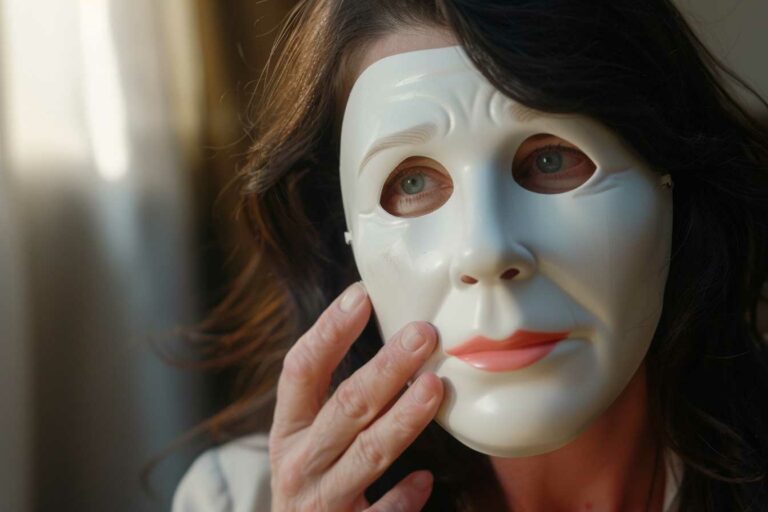
A few months ago, I posted on Instagram that I have struggled with depression, anxiety, and ADHD. Within minutes, my inbox was flooded with the sweetest messages asking if I was okay, if I needed anything, and checking in on me.
And I was so touched by that. Truly. But it also made me realize something important: there’s still this assumption that if you’re talking about mental health, you must be in crisis.
I wasn’t in crisis. I was just being honest about something that’s part of who I am.
So today, I want to break down what I call the “high-functioning fog.” It’s the reality of being a successful, accomplished woman who is also quietly managing anxiety, depression, or ADHD. Because we don’t talk about this enough. And when we do, it’s usually after we’ve already burned out or broken down.
You Can Be Smiling, Grateful, Successful, And Still Struggling
I want to bust a myth right now: depression doesn’t always look like sadness. Anxiety doesn’t always look like visible panic attacks.
Sometimes it looks like the woman running meetings, managing her household, having lunch with girlfriends, and building a business that looks amazing from the outside. Sometimes it looks like me: someone who can do all of those things while a subtle current of depression and anxiety just… runs through me. It’s part of who I am. It’s been woven into my life for as long as I can remember.
That stereotype of the “hot mess” who can’t get it together? That’s not what mental health challenges actually look like for a lot of us. The reality is often a well-dressed, polished overachiever who’s quietly battling something nobody sees.
And that disconnect? It’s harmful. Because just because someone looks okay doesn’t mean they aren’t struggling.
My Story (The Parts People Don’t See)
I’m not a licensed mental health professional. I want to be clear about that. I’m only sharing from my personal experience.
I first noticed something was different in high school. I was lonely a lot. Introverted and quiet. I latched onto people harder than I probably should have. To my teachers, my peers, and my friends I probably looked like someone who had it all together. I was a good student, doing all the right things.
And I did have it together, in a way. I just had this quiet storm swirling inside me. I didn’t realize that not everyone felt the way I felt. I thought that was just… how life was.
What people didn’t see, and what they still don’t always see, is the exhaustion. The mental clutter. The emotional spirals that happen internally while everything looks fine on the outside.
There’s often this internal narrative running alongside external success. Expectations you feel from others. Expectations you put on yourself. Your worth getting tied to productivity and achievement. It’s a lot to carry.
How This Shows Up in Entrepreneurship
Running a business while managing mental health brings its own unique challenges. Here’s what it looks like for me:
- Decision fatigue. By the end of some days, I cannot make one more choice. Not even what to eat for dinner.
- Perfectionism. The constant pressure to get everything exactly right, which honestly just slows everything down.
- Overthinking. I am a chronic overthinker. My brain loves to spin on things way longer than necessary.
- Inconsistent motivation. And I know there are books out there that say, “Just wake up at 5 AM, and you’ll be motivated!” But some days, the motivation just isn’t there. I’m not even talking about motivation to crush your goals. I mean motivation to get up, shower, and eat. Sometimes that’s the struggle.
- People pleasing and imposter syndrome. That fear of being “found out.” Like, people are going to realize I don’t have all the answers. I don’t have it all figured out. (Spoiler alert: none of us do.)
The paradox of being incredibly capable while feeling like you’re barely holding it together is real. And if you’ve felt that way, you’re not alone. I coach women who feel this exact same thing all the time.
What Actually Helps
I’ve learned a lot over the years about what supports me. Everyone’s different, but here’s what works for me:
- Therapy. On my Strategic Planning Wheel, there’s a component about wellness, and that’s not just physical. Mental wellness is part of that equation. Having a professional to talk to has been invaluable.
- Medication. And I want to say this clearly: there is nothing to be ashamed of if you need to take medication for your mental health. If you were diabetic and needed insulin, you wouldn’t feel guilty about taking medicine that helps you feel better. Mental health medication is no different. Work with your doctor, your therapist, and your psychiatrist. Find what works for you. There’s no one-size-fits-all.
- Daily routines. This has probably been the foundation of my coping. Routines give order to the chaos. While I can be flexible, any lack of structure actually feeds my anxiety. On the days when I’m lacking motivation, when decision fatigue hits, when I’m feeling scattered, having a routine I can almost do on autopilot is everything.
- Processes and systems. Routines aren’t just about time management. They can be your operating procedures in business, too. It’s why we have processes and systems—so we can remove emotion from certain tasks and just follow the process.
- Strategic delegation. Here’s something I see a lot: women building teams made up entirely of people just like them. But you don’t need four visionaries. You need implementers, integrators, people who are organized, people who follow direction—and yes, dreamers too. Be strategic about where you need support and build a team around those gaps.
- Creating environments that honor my energy. For me, that means quiet mornings. Planned breaks. Holding my boundaries. A little whimsy. I love fresh flowers because they’re beautiful and they force me to pause. Even the simple act of arranging them is almost meditative. Look at your physical and mental spaces. How are you honoring your energy?
Why We Need to Talk About This
In a social media world, we’re constantly seeing highlight reels. And I’m very conscious about what I put out there. I never want to send a message that says, “Look how easy life is.” Because that’s simply not true.
Life can be wonderful, beautiful, and brilliant. It can also be hard. And we need honest conversations about both, not just the highs, but the lows too.
Here’s what happens when we stay silent: we feed shame. For ourselves and for everyone watching who thinks they’re the only one struggling.
But when we tell the truth? We build community. We let other people know they’re not broken. Connection builds community, and community is what gets us through.
You’re Not Broken
If you’ve had a hard season, you’re not broken.
If you get more worried or panicked about situations than other people seem to, you’re not broken.
If you need support, and we all need support in some way, you’re not broken.
Mental health challenges are not a disqualifier for leadership. Your resilience is proof of your strength. You can be a Leading Lady and still have hard days. Trust me. I’m living proof!
You don’t have to wait until you fall apart to ask for help. You can be wildly successful and still struggle. That doesn’t make you weak. It makes you real.
Join My Community
Take care of yourself. It’s okay to ask for support.
Connect with me in the Leading Lady community on Facebook or find me on Instagram. If you’re looking for a starting point to check in with yourself on all areas of wellness, try the Strategic Planning Wheel.
Until next time—take the lead.