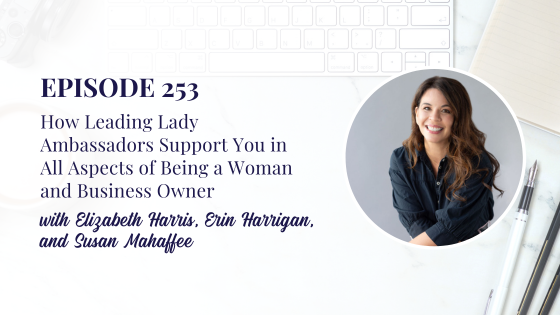
You can know your customer, your product, and your numbers inside and out, and still feel the wheels get wobbly the moment people enter the picture. I’m joined by Susan Mahaffee of People Rise, our 2026 Leading Lady Ambassador and HR expert, to talk about why the people side of business is often what stands between you and your next stage of growth.
As we head into the last sprint of the year and start planning for 2027, we ask a question most of us skip: are we planning for our people? Susan walks through the questions to ask yourself before you hire, the work you might need to stop doing, and where you may be the bottleneck without realizing it. We also get into how to interview for how someone thinks, not just how they make you feel, and a few strong opinions on iced coffee.
Hi there. You’re listening to the Leading Lady Podcast. I’m your host, AliceAnne Loftus, and I’m a certified professional coach specializing in leadership and work-life balance. I work with clients to shift their limiting beliefs, insecurities, and self-doubt. This podcast will be filled with tools and strategies to help high-achieving women like you feel connected, empowered, and in the lead of your life, both personally and professionally. Let’s transform your life, starting now. Lead yourself. The rest will follow.
AliceAnne: Hi there, leading ladies, and welcome to today’s episode. Today I have a very special guest and a very important discussion. Cannot wait to get into it. But I’d like to welcome Susan Mahaffey of People Rise. Susan is a 2026 Leading Lady Ambassador and our HR expert. I am so excited to have you here, Susan. Thank you for being my guest. And if you could just introduce yourself, and then let’s jump right in.
Susan: Yes. Thank you, AliceAnne. I’m excited to be here. So as you mentioned, I founded People Rise about four years ago. I like to describe myself as a people strategist, someone who likes to help you with the Tetris of leading people. And I help business owners feel more confident when they’re handling their people issues at their business. And I recently came out with a book in April, something I want to mention, When People Rise. It’s about secrets for small businesses around growth, success, and legacy, and something I’m also really proud of. So glad to be here with you.
Why Planning for 2027 Has to Include Your People
AliceAnne: I love your book. It has so many nuggets of wisdom. I feel like anytime anyone is asking me about issues or challenges they’re having with the people they manage, that’s the book that I hand them. So it’s go time for 2027, everyone. Everyone is calling me saying, “AliceAnne, help me with my strategy for 2027.” And this is what we do. We plan for the year. But are we planning for our people? And this is where you come in.
I’m so excited about this conversation because a lot of us go into business because we’re passionate about something. We believe in something. We have a product or a service that we love. And then as we scale our businesses, we realize that we really don’t know how to manage people or motivate people or get people on board with our business. And they’re good people.
Susan: Yes. Right.
AliceAnne: A lot of us hire good people, but getting good people aligned with what a business is doing and running things the way we see or imagine or want to have them run, that’s kind of a hard thing to do.
Susan: Yes, it is. Yeah, it is. That is where I start to see…
AliceAnne: The wheels get a little wobbly.
Susan: So, yes.
AliceAnne: That’s where you step in. How do we help our people? How do we plan for our people?
When the Wheels Get Wobbly: Hitting the People Portion of Business
Susan: Yeah. You bring up so many great points, AliceAnne. And I think what you just described is exactly what I encounter business owners feeling when they come to me, when they’re referred to me. Folks are describing the same feelings. They feel like they’ve gotten their business to a point where they know their customer, they know their product, they know what they’re selling. They’re even getting better at their financials and other things. And then they kind of run into the people portion.
And that’s usually also when I know that someone is struggling with either another growth strategy or looking to open another expansion, like another location, or they want to offer a new service, and it’s usually because they can’t do it all. And so it’s always…
AliceAnne: Because we can’t do it all, right?
Susan: Right. So you struggle with whether it’s delegation, whether it’s hiring the right people, whether you’ve been burned, and let’s be honest…
AliceAnne: The timing of hiring the right person.
Why Most Business Owners Wait Too Long to Hire
Susan: And most business owners, AliceAnne, they wait too long. They wait too long to hire someone. We get nervous about money. We get nervous about, you know, taxes and the whole… I get it, I’m a business owner too. I feel the same things. However, what I notice is that a lot of times we wait too long, and then we aren’t sure, and then we do this part-time or contractor bit. And so all I’m saying is that sometimes you’ve got to think it out and have a real clear, intentional purpose.
Strategy First, Then the Org Chart
Susan: What I noticed is that business owners who are getting into what they’re doing, they have their expertise, and the people portion is mine. And so what I help business owners do is say, let’s talk about your strategy. What have you planned? And so that’s kind of where you and I are, this, you know, joint little duo, because people come to you: what’s my strategy? What’s my business going to do and deliver in 2027? And then who do you need to support it?
And a lot of times I find business owners want to adjust the people before they have a strategy. And actually, org chart, let’s call it, follows strategy. So once you know where you’re going and what you’re doing, great. Now let’s back into what is it going to take, and what do you need that you don’t currently have? And that could be skills, that could be expertise, that could be you doing or operating things differently, or actually stepping up and stepping into things that you might be uncomfortable doing, because we all defer the things that make us uncomfortable. And a lot of times…
AliceAnne: That’s human nature, right?
Susan: It is.
AliceAnne: We do not want to be uncomfortable.
Susan: No, we don’t. No, we don’t. And we especially don’t with people, because we’re in a place now where, if you look around to your left, to your right, and also I’ll just mention briefly, right, the geopolitical climate, people are feeling a lot of stuff. People are people, and they’re complex, but they also have the same needs in general, right? People want to be seen, heard, felt, appreciated, and at work.
Leadership Is a Mirror
Susan: You and I would know this especially well, right? When we’re kids, school is where we learn. When we’re adults, work is where we learn. And it’s where we seek to grow, to learn, and to be better, but also where we form different opinions and see things differently. So a lot of business owners may forget that just because you’re an adult, it doesn’t mean you’re not still teaching and growing. I would hope…
AliceAnne: I would hope, and leaders know, leaders have learner mindsets. And so, you know, if you’re going into this thinking that you know everything there is to know about people, then I would invite you to maybe look at your leadership skills.
Susan: And you know what? A lot of times it’s just bringing it to the forefront, because I think a lot of people are just, we’re all running so fast. And so even just calling that out, I think, is a big aha moment for people. Yeah, it’s…
AliceAnne: I think nothing calls out your leadership skills more than working with people, right?
Susan: Yes.
AliceAnne: How you yourself… and it is absolutely a mirror. And, you know, like I said, my phone’s ringing off the hook. People wanting to have their 2027 strategy session. And 12 times out of 10, when I complete the strategy session, I say, you probably need to hire somebody, especially if they’re looking to scale or they’re, like you said, launching a new service or trying to do something new in their business. They’ve been in business a while, they’ve mastered what they’re offering, they know their client, all the things that you said, but we are only one person. And to take that next step or to be more efficient in our business, it usually requires outsourcing, delegating, bringing someone on board to help us out with that.
Susan: Absolutely. Yes. You’re so right.
AliceAnne: And so they might know that they need help, but they don’t know who they need or where that person fits. And usually my next thing that I say is, you need to call Susan.
Susan: Well, it’s very kind of you. It’s very kind of you.
Imagine Next November: What Will You Say You Accomplished?
AliceAnne: Well, and I think what I’m noticing too, especially the second half of this year, is that there are a lot of things business owners are recognizing that they either did or didn’t accomplish this year. Because we’re at the last sprint, right? We’re November through the end of the year. And so you’re kind of realizing, okay, what was the thing that went really well? What are the things that went not so much? And then we’re starting to really think about, okay, I may not be able to do it this year because time is running out, and I need to execute or go strong on whatever, fill in the blank.
Susan: Or close out, or whatever the thing is.
AliceAnne: Correct. And I’m saying this to a lot of folks. I’m saying, you know, what you need to do to end the year, where you need to be operationally. But what we also need to be thinking about is, how do we want to plan for next year? And what are you going to do differently, or in a way that is going to make the difference for how you talk about next year? So imagine a year from now, next November, what are you going to be saying about your business that you accomplished? That right now either feels really big or heavy, and it’s around your people.
And that usually sounds a bit like, oh, I know I need to hire X. Like, I need to hire a number two, or I need to hire someone to take over this location, or I want to do a mobile something or another and I need to, you know, purchase a truck, and I need somebody who can actually do those deliveries or take those customers or clients. I mean, there are so many different things happening. And so there’s usually a component of this that is not about you, the leader and owner. It’s about you really saying, I’ve got to lean into something that feels pretty large. But if I don’t do it, I’m going to be in the same place.
Susan: Yeah. Love that.
[Ad] Hi, I’m Elizabeth, a non-diet dietitian. Hey, I’m Tara, personal trainer, and this is Maria, a licensed mental health therapist. Together, we’re the hosts of Wellness Rebranded, the podcast where we redefine health by helping you heal your relationship with food, movement, and mental well-being. We’d love for you to tune in and give us a listen wherever you get your pods.
Three Questions to Ask When Planning for Next Year
AliceAnne: As you’re working with people, how do they prepare for people?
Susan: Yes, yes. So maybe I’ll offer a few thoughts for anyone listening. Okay, so let’s plan for next year. What does that really look like? I would invite anybody who’s trying to think about next year to think through a few things.
One, what do you need to accomplish in your business? So there’s probably revenue goals. There’s probably sales and maybe visibility goals, right? And then on top of that, there may be something that I always call the stretch. There may be something that says, I delivered what I wanted to, but if it’s a really great year, I may also have been able to accomplish this, whatever that is. An example of that could be maybe you’re going to launch a new service and you’re hoping to get, you know, I don’t know, five new clients from that, and actually you get ten. Especially, and I’ll say this in the therapy space, in wellness right now, I’m seeing a huge amount of growth, where I’m having potential clients and actual clients tell me, wow, I didn’t prepare, I didn’t think that this was going to take off the way it did. Which is great news. But you also have to think that way, because a lot of times we underprepare. So I would be thinking about what does good look like for next year.
And then the next question is, what are the things that you have to do, and what are the things that you have to give to someone else? It’s almost like, what are you going to stop doing? And sometimes that means you’re not…
AliceAnne: Come off your plate. Yeah.
Susan: Well, and a great example, I’m going to use a therapy example, is you’re not going to see clients. Maybe you’re actually going to have someone else see your clients, and you’re going to be spending more time on business strategy, visibility, getting to different events, things like that. And that takes time and a lot of emotional space. So if you’re going to do that, you need to plan for how to do that. And so that’s kind of the three steps I would take. What are you going to do next year? What work are you going to do, and what work should you stop doing? And I think what should you stop doing is actually probably the question that makes people pause the most and reflect the most. Yeah. Because you’ve got to really say to yourself, let’s be honest, what am I going to do different?
Where Are You the Bottleneck?
Susan: So the next thing that I would say is to think about your bottlenecks. Where are you also holding your business up? So for example, do you have some processes where you’re still doing payroll, or maybe you need people to be doing their payroll inputs and you just need to be pressing the button once you’ve given it an approval? Let’s just say maybe you need your office manager to take that on. Maybe you’re struggling with difficult conversations. Maybe your time management needs some work. So I think one of the other questions is asking yourself, what is it that I need to do differently about my process and the way that I lean into managing my business that probably could have made things easier if I wasn’t the part holding it up? And I will tell you, AliceAnne, I’m the first person to say I’ve noticed that I’m doing this same exercise for myself, because there are things where I know I’m the bottleneck, listeners.
AliceAnne: We are in the trenches with you.
Susan: Yeah, right.
AliceAnne: We understand this.
Susan: We know the bottleneck. So we are the bottleneck. We are the bottleneck. We are the bottleneck. And guess what? That is also what stops our business from experiencing the growth and the scale that we want, right? A lot of times that’s it, right? Because we are holding on tight.
AliceAnne: So, decision fatigue, micromanaging, all of those things. That’s where I see that I’m the bottleneck. So if I have the people in place that can help get around that, or help move me along, that’s really when I see the growth in my business.
Know Enough About Your People, Just Like Your Numbers
Susan: Yes. And I think, AliceAnne, you know, especially in my experience working with you, a lot of things I’ve realized is that sometimes you just need someone to reflect it back. And I think that’s where this conversation for me is going: you can only do so much thinking on your own, right? Because you’re in it. You’re seeing it every day. The next step in all of this, once you’ve kind of got that view, is when you need to engage the right person externally. And that’s where usually people come to me and we have a consultation where I’m saying, okay, where are you? What do you want to accomplish? What do you want to stop doing, and what’s it going to take?
And usually the result of this is, I have people something or another, right? It’s a people problem. It’s, I need a people resource. I don’t know what I need. So then it’s like, okay, let’s talk about a job description, right? And these are basics. One of the things that I do is I have a master class that we’re renaming the People Rise Table, and every cohort is 12 sessions. We meet in either a six-month or three-month increment, depending on what the group wants to do for that time period.
But the idea here is, you know, how we all have, hopefully, a CPA that does our taxes, right? We are not tax experts, right?
AliceAnne: Right. But you need to know your numbers.
Susan: Yeah, I know Gala McCray would say that.
AliceAnne: You would.
Susan: Yes, you would. You better, you better know your numbers. So you don’t have to be an expert, but you have to look at those financial documents and understand, is your business healthy or not? Well, the same thing goes for your people. And so the idea that I try to help business owners realize is that you need to know enough to handle how to hire the best people, how to offboard people, right? Sometimes that means it’s not working out. We have to have a tough conversation. And maybe you also have to better understand how to have performance conversations. And I like to say performance conversations, not performance management or performance review. Those are words we’re moving away from, by the way, because everybody dreads it, me included.
And so what I’m looking to do is help business owners feel confident enough, where you get a little taste of all of those things so that you can feel more comfortable when they come to your attention. And you also know when you need to flag it. So similar to your numbers, if something doesn’t add up, you’re like, I need to ask a question because this doesn’t make sense to me, right? So that’s essentially where I try to help business owners. And part of that is trying to dig into, well, what exactly is it?
Interviewing Beyond Your Gut
Susan: If I give you just one example, let’s say we talked about interviewing the other day. A lot of times I find that when we’re interviewing people, we go for our feeling, right? Like, we go, oh, I felt like they’d be a good fit. I really liked her.
AliceAnne: You know, I connected with her.
Susan: Yes. Yeah. Yes. And I don’t want to diminish that. But I also want to say, for example, I have this on my website where you can get my favorite 20 interview questions. They’re behavioral interviewing questions, and behavioral interviewing is different than, you know, asking questions about do you have experience doing X, Y, and Z? That’s technical. So what I would suggest is this: next year, for example, when you’re interviewing, I want you to ask the same core questions of everyone you talk to. Let’s make it simple. Three questions. I want you to find out what are the three questions that you could ask anyone, despite what job it is, that help you better understand how they think and make decisions.
So my favorite question, for example, in that realm is, tell me about a time where you had a difficult customer or client. What was the situation, what happened, and what did you do? And then you might also ask, what did you learn? The whole idea of that question is that I want to know your thinking. I want to hear what was your problem solving?
AliceAnne: Yeah. Yeah. Right.
Susan: I want to hear what was your thinking. And by the way, how complicated was that? What was your part in it? How did you navigate, and where did you bring in help, or how did you solve it, and what was the outcome? And so what you’re trying to do is hear if that person has the problem-solving skills. You want to also listen for when did they involve their manager or their boss, depending on the issue. And then the next question, when you ask them about what they learned, you should be listening for: what did they learn about themselves, and what did they learn that they’ll do differently in the future? Yeah. So those are the two things.
AliceAnne: So good, so good.
Susan: Yes. Because those two things are called learning agility. It’s the ability to learn something and apply it in future. And this is another great tip. If you’re a business owner and you’re stuck between one or two people and you’re like, oh, I like this person for this reason, and that, you know, maybe this person is better, my question to you would be, who has the ability to learn something and apply it in the future?
The “I Can’t” Employee vs. the “I Won’t” Employee
AliceAnne: Yeah. I call that looking for the “I can’t” employee versus the “I won’t” employee. The “I can’t” employee means, I can’t right now, but I will learn that, versus the “I won’t” employee, that is like totally closed off. They’ve already made up their mind that they know what they know, and you can’t train them.
Susan: Perfect. Perfectly said. Exactly. And that is a very different mindset. And we want to find people who are willing to learn, who are also willing, which is another thing. If I hear someone in an interview tell me when they got it wrong and admit to it, there’s a very high likelihood I think that’s somebody I need on my team, because someone who’s not afraid to actually share in an interview, when we’re all trying to put on our best face, yeah, actually willing to share something where you fell short takes a very special kind of person. And so I would especially be listening for something like that.
AliceAnne: Oh gosh, I feel like I could talk to you all day long about interview questions and how to find the right candidate. But, you know, I’ve been in childcare for 23 years. That’s a high-turnover industry. And I have learned so much about the interviewing process through that, and how to screen people, and how to really pull the characteristics that you’re looking for out of that candidate that maybe doesn’t interview well, but you learn a lot about who they are through that, and they end up being your star person. I’ve really found some diamonds in the rough there by just asking the right questions.
Susan: Yeah. AliceAnne, one thing to mention on that: it is not our goal to… which is another shift, I think, from the past, where we have a lot of expectations around how people dress, what people do, how they ask questions. We have to ask ourselves, are we also stuck in some old ways of thinking? Because the generation today that we’re in, people do things differently. Right? There’s digital. Let me ask…
The Iced Coffee Debate
AliceAnne: But let me ask you, how would you feel about an iced coffee?
Susan: Iced coffee? I knew you were going to ask me. I knew you were going to ask me. You know, it’s so interesting, because I feel very mixed on that question. I saw a number of people say, well, if they were late and they have the iced coffee, I’d be annoyed. On the other hand, I think it’s just a distractor. So I think it’s a distraction.
AliceAnne: Yeah.
Susan: Yeah. In the interview, I’m really wanting you to be locked in, so…
AliceAnne: I don’t want condensation everywhere, and I…
Susan: Yeah. That we, we…
AliceAnne: We could do a whole episode.
Susan: On iced coffee. Yes, we could.
AliceAnne: You know, for those that maybe don’t know what we’re talking about, it was a social media trend about how HR individuals felt about showing up to an interview with an iced coffee, and people had some pretty strong feelings about it.
Susan: Yes, they did.
AliceAnne: I have some strong feelings about it, which was so interesting, because Aubrey, my right-hand woman, has no problem with it at all. Yeah. Yeah. And she’s the one that’s doing all the interviewing.
Know Who You Are and What You Stand For
Susan: But you know what else? This is also something so key to this conversation, because part of what we all have to do as business owners and leaders is we have to check how we think about things and where we feel like we also have to evolve our thinking and…
AliceAnne: Where we draw the line in the sand.
Susan: And where we draw the line. And you know what? You may have a business where that is absolutely something that doesn’t display the culture and the, you know, the feeling that your organization, your business, conveys to its customers and clients. That may be something that just doesn’t jive. And that’s okay. But know who you are.
AliceAnne: But know who you are and what you stand for. So I love this. I know we’re running out of time on this episode, but you’ve got some great resources. So you’ve talked about the 20 interview questions on your website. You’ve got this roundtable or mastermind that you’re kicking off. So for any of our listeners, if you feel like you have a strategy for 2027 but you have not thought about your people, I’m going to invite you to download her freebie and learn more about that. Reach out to Susan. What are those challenges that you’re having with managing people? If you have thought to yourself, you wished you could just clone yourself, we still can’t do that. So no.
Susan: Not yet.
AliceAnne: Not yet. So you’ve got to figure out how to manage your people and how to create a culture worth working for or working with. These are some great tools and a wonderful conversation that I think we need to have all the time. It needs to be an ongoing conversation about the people in our companies and our businesses. But thank you, Susan, for being such a valuable resource and bringing this conversation to the front. Just calling it out and saying, we have to talk about these things. Our businesses do not thrive without our people, and our people have to thrive within our organizations. So any parting words for our listeners today?
Parting Words: You Don’t Have to Do It Alone
Susan: I would say this. AliceAnne, you don’t have to do it alone.
AliceAnne: You don’t. We’re not meant to…
Susan: No, exactly… do it alone.
AliceAnne: Exactly. So as you were wrapping up and sharing that, that’s exactly what I thought about next. I mean, if you’re listening to this podcast, you already know that you want to hear what others are doing. You want to hear what’s going on out there. And that’s one of the most valuable pieces, I think, of being a business owner, is that you’re just trying to figure out how are other people doing this? You’re not alone. There are other people just like you who want to be part of the conversation, understand what is possible out there. And there’s a route to continuing to do great things with your business. And it doesn’t have to be by yourself.
Yeah, I love it, I love it. Well, thank you so much.
Susan: Thank you, AliceAnne.
AliceAnne: Yes. Check out the show notes for her freebie, how to connect with her, get her book. You don’t want to sleep on that. If you have a team, you need her book. If you’re thinking about having a team, you need her book. But thank you, Susan. Always a pleasure. And it’s making me think, am I ready? Are my people ready for 2027?
Susan: Yes, yes. More work on that. Thanks, AliceAnne.
AliceAnne: Until next time. Take the lead.
Thanks for tuning in for another episode of the Leading Lady Podcast. You can find all of the links and information mentioned in this episode at www.leadinglady-coaching.com/podcast. If you enjoyed this episode, don’t forget to follow the show so you don’t miss any future episodes. And while you’re there, it would mean the world to me if you would take a few seconds and leave me an honest review. This will allow me to be able to help other high-achieving women find inspiration, connection, and develop strategies to live and lead with purpose and intention. See you here next week.
In Today’s Episode, We Discuss:
- The moment in business growth when the people portion gets tricky, and why it often shows up right when you are ready to expand
- Why waiting too long to hire is so common, and how fear around money and taxes plays into it
- Why strategy comes first and the org chart follows
- Three questions to ask yourself when planning for next year, including the one that makes people stop and reflect
- How to spot where you are the bottleneck, from decision fatigue to micromanaging
- Why you need to know enough about your people to spot when something does not add up, the same way you do with your numbers
- Interviewing beyond your gut: asking the same core questions of everyone and listening for learning agility
- The “I can’t” employee versus the “I won’t” employee, and why that mindset matters more than experience
- The iced coffee interview debate, and why knowing who you are and what your business stands for matters
If you have a strategy for 2027 but have not thought about your people yet, this one is for you. If you have ever wished you could clone yourself, or you keep feeling like everything runs through you, Susan gives you simple, doable starting points. Press play, grab a notebook, and then check the links below to take the next step. You do not have to do it alone.
Resources Mentioned:
Grab Your Free 2027 People Planner
Follow & Review the Leading Lady Podcast
If you’re not already following the podcast, I’d love for you to hit that follow button wherever you listen so you never miss an episode. I’ve got some incredible guests and conversations coming up, and I’d hate for you to miss out!
And can I ask a favor? If you’re loving what you’re hearing, it would mean the world to me if you’d leave a review or rating. I read every single one (yes, really!), and it helps other leading ladies just like you find our community. Thank you for being here!